
The journal
What does 'inspired by' actually mean in fragrance?
An honest account of what an inspired-by fragrance is, how the industry that makes them actually works, what you can reasonably expect from one, and where the line sits between describing a scent and pretending to be somebody else's product.
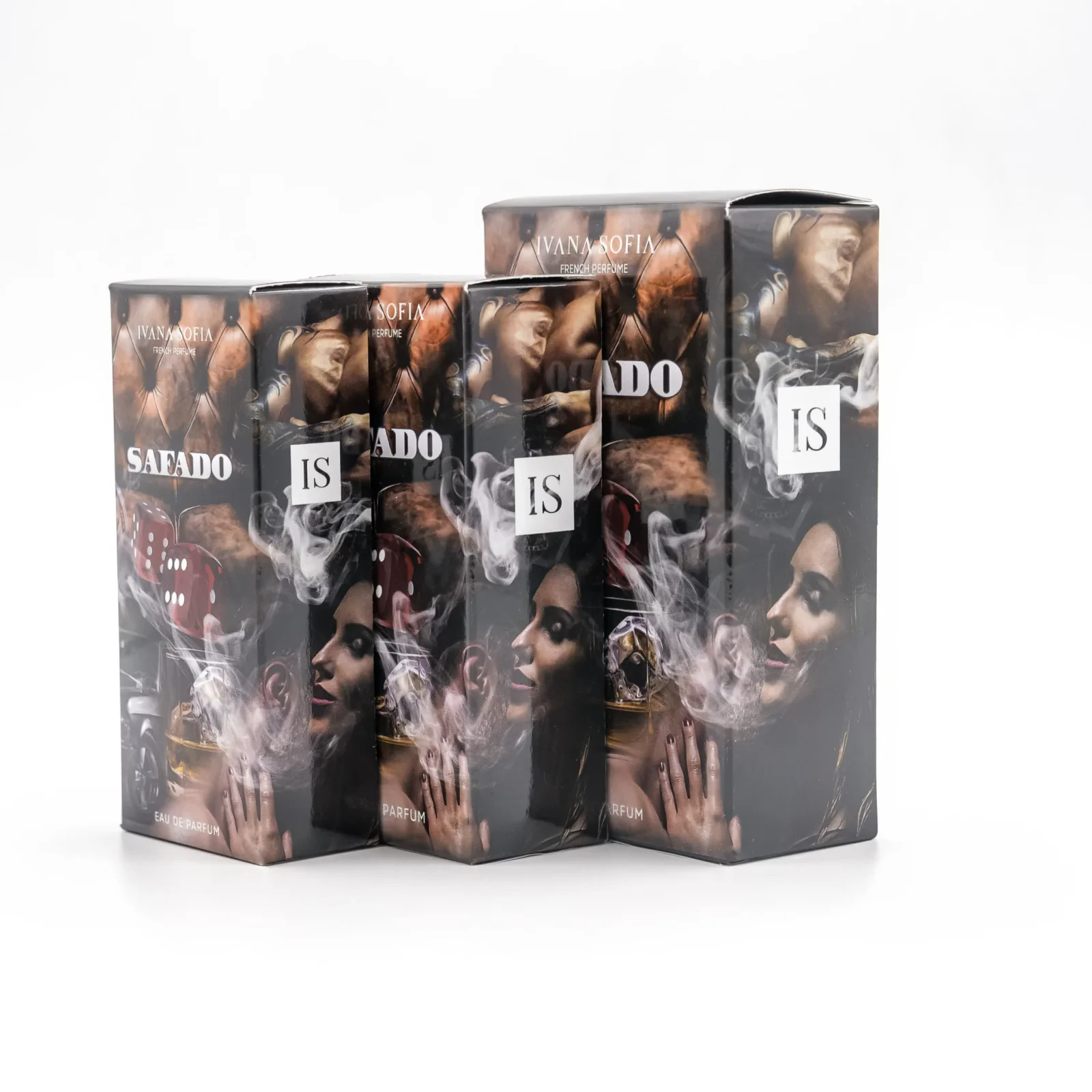
Our whole business rests on two words, so they deserve a proper explanation rather than a line of small print. This is what inspired by means when we use it, what it does not mean, and how to judge anyone else who uses the phrase.
The short answer
Every Ivana Sofia fragrance is an original composition, created in response to a well-known designer scent. We blend it ourselves in Eikenhof, Johannesburg, from A-grade French fragrance oils. It carries our name, our label and our formulation.
We tell you which designer fragrance inspired it because that is the fastest, most honest way to describe how ours smells. Saying a fragrance is a warm ambery floral with coffee and vanilla is accurate and not very helpful. Saying it was inspired by Black Opium tells you in three words what character to expect.
What it is not: it is not that product, it is not made by that house, and we are not affiliated with, endorsed by or connected to any of the brands we name. Those names are their owners' trademarks. We use them descriptively and nothing more.
How the fragrance industry actually works
Most people assume that a designer house employs perfumers who invent its scents in a laboratory behind the boutique. Occasionally that is true. Far more often the house writes a brief and commissions the fragrance from one of a small number of specialist fragrance and flavour companies, most of them in France and Switzerland, who employ the perfumers and hold the materials.
That is not a scandal, it is simply how the trade is organised. The designer house pays for the composition, then attaches a name, a bottle, a campaign and a distribution network to it. The perfume is one part of a much larger product.
This matters for two reasons. It explains why the price of a designer bottle is largely not the liquid inside it, and it explains why the raw materials that make a fragrance excellent are available to anybody prepared to buy that grade of oil. We buy that grade.
Why formulas are not secret in the way you might think
A fragrance formula is not protected the way a song or a logo is. There is no copyright in a smell, and almost no perfume is patented, because a patent would require publishing the formula. What the law protects is the name, the bottle design, the label and the branding, which are trademarks and designs.
So the line is clear and we stay well on the right side of it. Goods that carry another company's name or packaging without permission are illegal, and we do not make them. Creating your own composition in the spirit of a well-loved scent, giving it your own name, and saying openly what inspired it is ordinary practice in perfumery and always has been. Houses have been answering each other's successes since the 1920s.
What you can reasonably expect
Here is where we would rather be honest than persuasive.
You can expect the character. The family, the mood, the dominant notes and the broad shape will be recognisable. People who know the original usually name it within a few seconds of smelling ours.
You can expect the quality of the oils to hold up. That is the part we refuse to economise on, because it is the part you wear.
You cannot expect the two to be indistinguishable. They are different formulations by different people. Some materials are exclusive to a particular house. A fragrance is hundreds of decisions, and two perfumers working towards the same idea will make different ones.
You cannot expect your skin to behave. The original does not smell the same on you as it does on the person who recommended it, and neither will ours.
Longevity and projection may differ, in either direction. Ours are eau de parfum concentration throughout, which is often stronger than the eau de toilette version of a designer fragrance and lighter than its parfum.
Why ours costs R70 to R200
Nothing about our price is a comment on the quality of the liquid. It is a comment on everything we have removed from around it.
There is no advertising budget, no celebrity face, no magazine spread. The glass is plain and light, which also makes it cheaper to courier. There is no importer, no distributor, no retailer and no shelf in a shopping centre. We blend, bottle and post from the same building. What is left is the fragrance, the bottle it is in, and the cost of getting it to your door.
You can read the longer version of that reasoning in our story, and see how the fragrances are made inside the factory.
How to judge anybody selling an inspired-by fragrance
Not everyone in this category behaves well. A few things to look for, ours included.
- Does the product have its own name? A fragrance sold under a designer's name, or with a number code standing in for it, is trading on somebody else's trademark.
- Does the bottle look like the original? Packaging that mimics a designer bottle is designed to deceive somebody, eventually.
- Do they say who made it and where? A seller who will not tell you where a fragrance is blended is telling you something.
- Do they claim it is the same thing? Anyone promising you a fragrance indistinguishable from a designer scent at a tenth of the price is overselling, and you should assume the rest of their claims are stretched too.
- Is the concentration stated? Eau de parfum, eau de toilette and a vague word like fragrance oil are not the same product.
- Can you return it? A seller confident in the product gives you a way out. Ours is on the returns page.
Why we name the designer fragrance at all
We have been asked whether it would be simpler to describe our fragrances in our own words and leave the comparisons out. It would certainly be quieter.
The trouble is that it would be less useful and slightly dishonest by omission. Somebody who wears Good Girl and is looking for something they can afford to wear daily deserves to be able to find it. Hiding the reference would not make the fragrance any more original, it would just make it harder to shop for, and it would leave customers guessing at exactly the point where they need information.
So we say it plainly on every page, alongside a clear statement that we have no affiliation with the house in question. Both of those things are true at the same time, and we would rather print both than neither.
The full list of sixty pairings is in the inspired-by directory. If you would rather start from how you want to smell than from a brand you already know, try the scent finder.
Filed under
- inspired by
- how we work
- fragrance basics


